Select your language


Academic Program 2026
MAIN TOPICS
Efficiency, decarbonization, and technological transformation in HVAC/R
The HVACR industry is undergoing a phase of profound evolution marked by energy transition, regulatory pressure, and technological acceleration. In this scenario, operational efficiency and decarbonization are no longer emerging trends, but strategic pillars redefining the present and future of the sector.
This core theme will enable the development of content related to:
Topics:
- Energy optimization in HVAC and industrial refrigeration
- Transition to alternative refrigerants and safety in their implementation
- Automation, remote monitoring, and predictive maintenance
- Integration of digital technologies and data management
- Innovation in system design and commissioning
- Environmental regulations and international standards
- Cold chain efficiency
- New business models focused on performance and sustainability
Academic Committee
Conference topics reviewed by industry experts
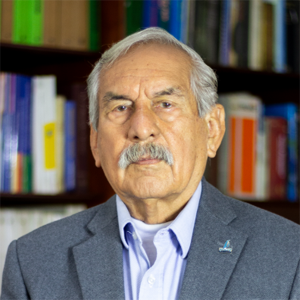
CAMILO BOTERO

TULIA
RIOS

NELSON
CRUZ
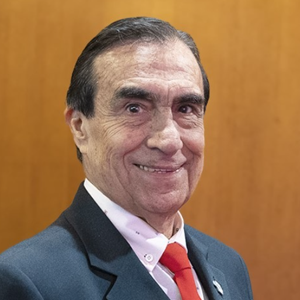
ERNESTO SANGUINETTI

ALFREDO ESCÁRATE
If you have any questions, please contact María Eugenia Rave at [email protected] or use the support chat.
 Contact us for more information.
Academic Program 2025
The digitalization of industry and the constant pursuit of efficiency.
We will explore the advances and challenges in the air conditioning and refrigeration industry, covering everything from energy efficiency and maintenance to automation and sustainability. We will analyze the impact of digital twins and smart buildings, promoting a more efficient and environmentally friendly future. Industry experts will share their knowledge in specialized panels, fostering the exchange of ideas and collaboration to drive innovation.
*Conference rooms on the second floor
FULL QUOTA

Dates and time
Wednesday, July 23rd and Thursday July 24th, 2025.
Day 1: 11:30 hrs. - 17:30 hrs.
Day 2: 11:30 hrs. - 16:00 hrs.

Venue
Dominican Republic
Santo Domingo, Sans Soucí Ports F4CF+898, Santo Domingo Este 11603

Cost
USD $50
Academic program and trade show without discount

Discounts
During online registration, in the Promo Code field, use code RFA10 to access the 10% discount.

Includes
- Access to the conferences and exhibition area.
- Academic Kit.
- Conference proceedings.
- Access to the Virtual Pre-Congress - via Zoom.
- Access to training workshops (in the morning).
- Electronic attendance certificate.
- Digital subscription to the official event magazine.
- Refreshments and coffee bar during both days of the conference (lunch not included).

Payment method
Register for the event and make a payment online using the link provided.
If you have any questions, please contact María Eugenia Rave at [email protected] or use the support chat.
Conferences Day 1
*Conference rooms on the second floor

-
 Spanish Conference
• 11:30 Hrs - 12:15 Hrs
Digital Twins: Transforming the Engineering Design Industry with Technological Innovation
In this session, we will explore how digital twins are revolutionizing the way we design, coordinate across different disciplines, and especially save time in moving from design to project execution. This talk is designed for all engineering industry professionals seeking to stay at the forefront of technology and explore tools like BIM and advanced digital platforms integrated with software such as Autodesk Revit.
Spanish Panel• 12:15 Hrs - 13:00 Hrs
HVAC Industry Managers Panel
In this dynamic panel, we’ll explore the current challenges, emerging trends, and future outlook of the industry. Managers from distribution companies will share their experiences, perspectives, and strategies to navigate a constantly evolving market. From supply chain management to the adoption of new technologies, this panel will offer deep and revealing insights into the HVAC landscape. A must-attend for professionals aiming to stay ahead!
Spanish Conference• 13:45 Hrs - 14:30 Hrs
New generation of DOAS with liquid desiccants: Technology that improves energy efficiency and dehumidification
This presentation introduces the new ISMRE2 metric as a key benchmark for assessing energy efficiency in 100% fresh air HVAC technologies. It reviews the evolution of DOAS systems, highlighting their impact on air quality and operational performance. It also highlights how liquid desiccant technologies are ideal for controlling humidity with low energy consumption in hot and humid climates, driving more sustainable buildings with high environmental performance.
 Mateo Cardona, Gerente Regional Comercial, LATAM y Sur de Florida, Mojave Energy Systems, Inc. Spanish Conference
• 14:30 Hrs - 15:15 Hrs
Heat Pumps for DHW and DOAS for Temperature and Humidity Control in Hotels
Energy efficiency and thermal comfort are key factors in the hotel industry. We will explore how advanced solutions available on the market can optimize energy consumption in HVAC and ensure a comfortable and healthy environment in hotels and resorts while achieving significant reductions in operating costs.
 Francisco Raya - Keyter - España Spanish Conference
 • 15:45 Hrs - 16:30 Hrs
Design parameters in highly complex hospital services
This session will identify design parameters and qualification processes for air conditioning systems in pharmaceutical and high-complexity hospitalization facilities. We’ll examine the required characteristics for qualifying air systems in high-impact hospital zones such as transplant units, radiopharmacy, nuclear medicine, and compounding centers.
Spanish Conference• 16:30 Hrs - 17:15 Hrs
The Gap Between Manufacturer Data and Real Performance in HVAC Energy Efficiency Using the Psychrometric Chart
We must consider that the differences between manufacturer data and real-world performance—especially regarding energy efficiency—are due to ideal lab conditions versus actual usage. Key influencing factors include regional temperature and humidity differences, installation type, and equipment maintenance. The psychrometric chart is an essential tool for accurately understanding energy efficiency in real operational conditions.
Spanish Panel• 17:15 Hrs - 18:00 Hrs
CALA AWARDS 2025 Finalists Panel
The CALA Awards finalists will present technical details of their nominated projects. They’ll also discuss the challenges faced and their current market perspectives, with an emphasis on how Artificial Intelligence is being implemented as a support mechanism for the industry.
- Spanish Panel
• 11:30 Hrs - 12:15 Hrs
Panel: Smart Refrigeration – The Digital Revolution in the Cold Chain Industry
We’ll analyze how the Internet of Things (IoT), Artificial Intelligence (AI), and Big Data are revolutionizing refrigeration system management and operation. From process automation to real-time monitoring and predictive maintenance, these innovations enhance efficiency, cut costs, and promote sustainability by minimizing energy waste and optimizing resource use..
Spanish Conference• 12:15 Hrs - 13:00 Hrs
Success Case – Cold Storage Facility in Santo Domingo
Discover this success story about the construction and operation of cold storage facilities for food by Emergent Cold Latam, built following EDGE Advanced sustainability standards. The operation emphasizes environmental efficiency through ozone-friendly refrigerants and energy/water-saving systems, reinforcing the company’s commitment to sustainability.
Spanish Conference• 14:30 Hrs - 15:15 Hrs
Success Case: First CO₂ Transcritical Refrigeration System in the Dominican Republic
This project proves that CO₂ refrigeration is not only viable in hot climates, but also highly effective in reducing energy consumption and greenhouse gas emissions. Through the use of ejectors, smart controls, and key components, this innovative solution has reduced a supermarket’s electricity costs by up to 15%.
 Alberto Pasqualetti - SCM Frigo - Italia Spanish Conference
• 15:45 Hrs - 16:30 Hrs
Common Failures in Refrigeration Systems: Diagnosis and Solution with Advanced Methods
A practical approach to identifying, diagnosing, and solving critical refrigeration system failures using data analysis and advanced tools.
 Ing. Msc. José Hernán Alvarez Martínez - Consultor - Colombia Spanish Conference
• 16:30 Hrs - 17:15 Hrs
Efficient and Sustainable Refrigeration in Supermarkets
Energy efficiency and safety are essential for preserving the sensory qualities of food. INTARCON offers a wide range of solutions using natural refrigerants, ensuring optimal product preservation in supermarkets and logistics centers. These solutions, including transcritical CO₂, cascade CO₂ with R290, and R290 chillers, feature low energy consumption and high reliability.
Spanish Panel• 17:15 Hrs - 18:00 Hrs
CALA AWARDS 2025 Finalists Panel
-
 In its 21st edition, taking place in Santo Domingo, Dominican Republic, on July 23–24, RefriAméricas will launch its first HVAC Automation Congress. The goal is to bring together specialists, professionals, suppliers, integrators, and contractors in HVAC who focus on the installation, commissioning, and maintenance of building automation systems for residential, commercial, and industrial settings.With a program of sessions on technology, trends, case studies, and applications presented by manufacturers, consultants, independent professionals, and associations that support and promote the industry’s most adopted automation protocols, the RefriAméricas Automation Congress aims to become the go-to Spanish-speaking forum for automation in Latin America.Note: Building Automation Conference is part of the Refriaméricas ACADEMIC PROGRAM and is available only to paying attendees. Spanish Conference
• 11:30 Hrs - 12:15 Hrs
Cybersecurity and the Red5 Controller
Cybersecurity is the practice of protecting systems, networks, and programs from digital attacks. It involves using technologies, policies, and practices to prevent cyberattacks or reduce their impact.
Spanish Conference• 12:15 Hrs - 13:00 Hrs
HVAC Systems: When Projects Go Wrong
Have you ever wondered why HVAC systems don’t perform as designed? Or why they consume more energy than expected? In this talk, we’ll explore common errors found over 20 years of experience—in design, hydronic balancing, automation, commissioning, and operation. We’ll uncover the causes, recurring mistakes, and typical symptoms, and show how to ensure design intentions are achieved or how to improve underperforming systems to make them energy efficient.
Spanish Conference• 13:45 Hrs - 14:30 Hrs
Integration with KNX in HVAC Systems
KNX is an open and versatile communication protocol also used in HVAC environments due to its ability to communicate, interact, and work with other specialized HVAC protocols.
Spanish Conference• 14:30 Hrs - 15:15 Hrs
Integrating the HVAC World into a Single Interface
This presentation will focus on more than 20 years of work by Airzone developing communication protocols with each of the different HVAC manufacturers, in order to ensure communication with the various units and thereby control, integrate, and enable connection with home automation and integration systems for the residential, commercial, and hospitality sectors.
Spanish Conference• 15:45 Hrs - 16:30 Hrs
Smart Thermostats: The Future of Connected Spaces
The future of thermostats is already here. Resideo is strongly focused on the needs of the home of the future, where multiple solutions converge to provide us with a more comfortable, safe, and protected life. With the help of remote services, thermostats—like many other solutions—now operate fully and with great precision, working with both traditional local systems and smart IoT systems via the cloud. The ability of devices to interoperate offers simple solutions for medium- and large-scale applications, with functions that enhance both equipment performance and user experience.
Spanish Conference• 16:30 Hrs - 17:15 Hrs
Beyond Control: The Future of HVAC-R Automation Has Already Begun
We will explore the evolution of HVAC control systems, from the earliest mechanical thermostats to the most advanced digital solutions. We will analyze the development of digital controllers, the use of remote management software via the Internet, and the role of modern intersystem communication tools such as P2P, APIs, and Modbus.
 Fabio Pettena
















Conferences Day 2
- Spanish Conference
• 11:30 Hrs - 12:15 Hrs
Practical Applications of Artificial Intelligence in the Design and Operation of HVAC Systems
Spanish Panel• 12:15 Hrs - 13:00 Hrs
Sales Experts Panel
Sales experts from the air conditioning and refrigeration sector will share their insights and winning strategies. What will you learn? Market Trends and Demands: Understand the current landscape, Sales Strategies: Learn the most effective techniques to attract and retain customers, Technological Innovations: Discover how new technologies can transform your business.
Spanish Conference• 13:45 Hrs - 14:30 Hrs
Waste Valorization in the Management and Handling of Air Conditioning and Refrigeration Equipment: Strategies for a Sustainable Circular Economy
 Elías Gómez Mesa - República Dominicana - ADOMTRA Spanish Conference
• 14:30 Hrs - 15:15 Hrs
Technician 4.0: Challenges and Opportunities in a Globalized Market
 Ernesto A. Escoto Ventura - Facilitador de Infotep - República Dominicana Spanish Conference
• 15:15 Hrs - 16:00 Hrs
Challenges and Needs of the RACV Industry in the Agricultural and Livestock Sector in the Dominican Republic
 Jonás Coronado Gómez - especialista en refrigeración docente y asesor técnico - República Dominicana
 - Spanish Conference
• 11:30 Hrs - 12:15 Hrs
Comparison of R717 and R744 Systems in a Distribution Center
This paper analyzes the low-charge ammonia refrigeration system, its operation in a tropical climate, and compares it with a dual-stage CO2 refrigeration system with parallel compressors, ejectors, dedicated liquid subcooling, and heat recovery for both systems.
Spanish Conference• 12:15 Hrs - 13:00 Hrs
Predictive Maintenance in Refrigeration Systems: Beyond Preventive
This session will explain how predictive maintenance tools—such as vibration analysis, thermography, and ultrasound—can improve the reliability and efficiency of refrigeration systems.
Ing. Msc. José Hernán Alvarez Martínez - Consultor - Colombia Spanish Panel• 13:45 Hrs - 14:30 Hrs
Panel: Refrigeration Industry Manufacturers & Distributors
Leaders and representatives from major companies in the industry will share their knowledge and experiences. This panel is a unique opportunity to explore the latest trends and innovations that are reshaping the sector.
Spanish Conference• 14:30 Hrs - 15:15 Hrs
Advanced Guide to Saving 50% Energy in Retail, Large Surfaces, and Distribution Centers
Large retail stores and distribution centers are significant energy consumers—both from food refrigeration (in display cases and backroom storage) and from HVAC systems. Achieving energy savings of around 50%, as proposed in this guide and based on compliance with ASHRAE standards, requires multiple measures—some passive, others involving adjustment and, of course, technology and architecture analysis. This session will present the ASHRAE methodology, the results achieved, and the combination of actions needed to reach this ambitious goal.
Spanish Conference• 15:15 Hrs - 16:00 Hrs
Trends in Ammonia Refrigeration
Low-charge ammonia systems. Effective use of ammonia as a refrigerant. Design considerations.
 José Luis Moreno - Instituto de Energía - República Dominicana Spanish Conference
• 16:00 Hrs - 16:45 Hrs
MPG: Más allá del frío. Tecnología aplicada y conocimiento que construyen el futuro
A través de dos casos de estudio reales, se mostrará cómo la capacitación técnica y la implementación de nuevas tecnologías resolvieron problemas críticos en proyectos de refrigeración. Se destacarán soluciones aplicadas en obra, mejoras en eficiencia operativa y beneficios sostenibles a futuro. Una invitación a ver la refrigeración no solo como un sistema, sino como un resultado del conocimiento bien aplicado.
 Juan Carlos Quintero - Gerente Internacional de Ventas en McElroy Manufacturing
 - In its 21st edition, taking place in Santo Domingo, Dominican Republic, on July 23–24, RefriAméricas will launch its first HVAC Automation Congress. The goal is to bring together specialists, professionals, suppliers, integrators, and contractors in HVAC who focus on the installation, commissioning, and maintenance of building automation systems for residential, commercial, and industrial settings.With a program of sessions on technology, trends, case studies, and applications presented by manufacturers, consultants, independent professionals, and associations that support and promote the industry’s most adopted automation protocols, the RefriAméricas Automation Congress aims to become the go-to Spanish-speaking forum for automation in Latin America.Note: Building Automation Conference is part of the Refriaméricas ACADEMIC PROGRAM and is available only to paying attendees. Spanish Conference
• 11:30 Hrs - 12:15 Hrs
Data Modeling, BACtology, and Project Haystack
Data modeling and Project Haystack are essential for managing and analyzing cloud-based data. Project Haystack standardizes data semantics, facilitating integration and analysis. This is crucial for modern Building Management Systems (BMS), which rely on accurate data to optimize energy performance and reduce operating costs. ASHRAE has been working on a data modeling standard and has released the first draft of Addendum ct to Standard 135-2024 BACnet, provisionally known as BACtology. The purpose of the addendum is to gather industry feedback on the proposed methods and eventually incorporate this common methodology and semantics into the BACnet standard.
 Julio Londoño - Gerente de ventas para América en J2 Innovations Spanish Conference
• 12:15 Hrs - 13:00 Hrs
Wireless Technology that Replaces BACnet Cabling
This presentation will offer a technical overview of implementing wireless networks in building automation systems using W-BACnet technology. It will explain how this solution enables the creation of wireless mesh networks that maintain interoperability with the BACnet MS/TP protocol, eliminating the need for physical wiring. It will also highlight its compatibility with other protocols such as Modbus RTU and DALI, allowing broader integration in projects with multiple types of devices. Technical features such as self-forming and self-healing capabilities, interference immunity via Cognitive Coexistence™, and the ease of integration with existing devices without structural modifications will be addressed.
Spanish Conference• 13:45 Hrs - 14:30 Hrs
Cloud Monitoring for Building Automation: Efficiency and Scalability
This presentation will explore how cloud monitoring is revolutionizing the way we manage and maintain Building Automation Systems. We will learn about the benefits of remote monitoring, real-time data collection, and automated decision-making to improve energy efficiency and reduce costs.
Spanish Conference• 14:30 Hrs - 15:15 Hrs
Automation Integration in Bioclimatic Architectures: Strategies for Warm Climates
Automation is often associated mainly with controlling mechanical systems such as air conditioning or artificial lighting. However, its true potential is revealed when it is integrated from the design stage as a strategic complement to the passive strategies of bioclimatic architecture. This presentation will discuss how automation can enhance the thermal and environmental performance of buildings in warm climates, not only by optimizing resource use but also by adapting the building’s operation to changing environmental conditions. Through a comprehensive approach, it will explore how the use of sensors, automated control of openings and solar protections, and dynamic system management enables the development of more efficient, comfortable buildings aligned with the principles of passive design.
 Ernesto Porras - Ingeniero Mecánico y Magister en Arquitectura y Urbanismo Bioclimático
• 15:15 Hrs - 16:15 Hrs
Panel discussion on automation protocols











If you have any questions, please contact María Eugenia Rave at [email protected] or use the support chat.
 Contact us for more information.